


Last Updated on 6 November 2026 by Ariana Svenson
Albany is located in Western Australia’s Great Southern region, surrounded by beaches, wildlife and some incredible national parks. National parks and nature reserves lie in almost every direction, so it doesn’t take long to leave town and find rugged southern coastline, wild beaches and bushland.
It’s worth adding at least one Albany national park to your itinerary, especially if you enjoy hiking, wildlife, or seasonal wildflowers. The area is recognised for its incredible biodiversity, on land and along the coast.
If you’re looking for national parks near Albany, this guide covers the closest options as well as a few parks worth the longer drive. You’ll find details on how far they are from Albany, what to see and which walks to try, along with practical tips on access, safety, park fees and what to know before you go.
Disclosure: Through my site, there are links to affiliates, which means that I might receive commission if you buy something after clicking them. This costs you nothing more, and you definitely don’t pay extra. However, I do get a small amount, which contributes to the upkeep of this blog. Thanks so much for all of your support – and we hope you have a ball in Western Australia!
The Albany National Parks
Torndirrup National Park
Location: The Gap Rd, Torndirrup
Distance from Albany: 10 km South
Getting There: Torndirrup is an easy drive from central Albany via Frenchman Bay Road. The route follows the edge of Princess Royal Harbour before heading towards the coastline south of town.
If you only visit one Albany national park, Torndirrup National Park is the obvious place to start. Covering 3,906 hectares, it has some of the most beautiful coastal scenery in WA. Think coastal cliffs, wild beaches and incredible views of the Southern Ocean.

The park is also important to the Menang people, who are recognised as the Traditional Owners of the area. One historical interpretation of the name Torndirrup is “white sandy”, referring to the white sandy beaches around the peninsula. Another interpretation links the name to the sound of crashing waves or thunder, which feels fitting once you see how powerful the coastline is here.
This part of the coast also puts you close to several major Albany attractions. These include Gap and Natural Bridge, the Albany Windfarm, and Discovery Bay.
Top places to visit in Torndirrup National Park include:
The Gap

The main spot everyone visits is the Gap and Natural Bridge, and it’s easy to see why. At the Gap, a cantilevered viewing platform takes you right out over the dramatic coastline of Torndirrup National Park.
If you’ve visited the Granite Skywalk in the Porongorups or the Tree Top Walk at Walpole, this is another one of those impressive WA structures that makes you go WOW!
Honestly, as if the Gap didn’t make you go wow already! Over millions of years, the Southern Ocean has carved a vast channel through the granite, and you can watch the waves crash and swirl below.
I won’t lie, I got jelly legs! You’re standing around 40 metres above the surging Southern Ocean, and although the views are incredible, seeing all that water below your feet can be a little terrifying. My son wasn’t willing to step onto the see-through decking, and I don’t blame him! The platform extends over the cliff, with grated floor sections that let you look straight down into the ocean at a sheer drop of almost 25 metres.

Natural Bridge
Walk a few metres along the dedicated path, and you’ll reach Natural Bridge. The Southern Ocean’s force has shaped this huge rock formation over time, wearing away the granite.
Standing here is another reminder of just how powerful the ocean can be. It’s less nerve-racking than stepping out over the Gap, but the rugged coastline is every bit as impressive.
Drone Tip: The Gap and Natural Bridge are also popular spots for drone photography. I’m not sure why anyone would want to fly one here with the crazy winds, but the aerial shots can be pretty spectacular! Make sure you check the current drone policy for Western Australian national parks before flying.
Blowholes
The Blowholes are another dramatic stop in Torndirrup National Park. As waves hit the coastline, air and sea spray are forced through narrow cracks in the granite, creating the blowhole effect.
How impressive they are depends on the ocean conditions, so you may hear the rush of air even when there isn’t much spray.
From the car park, it’s a reasonable walk to the Blowholes, with a flight of stairs followed by a wide sealed path. When conditions are right, you may hear them, or even see the spray, before you reach the viewing area.
Apparently, there are also signs when the Blowholes are ‘blowing’, but we didn’t see one.
Misery Beach
Then there’s Misery Beach, one of the park’s best-known spots after being named Australia’s Best Beach in 2022. Despite its rather unfortunate name, it’s a beautiful little beach surrounded by granite outcrops and clear water. It’s well worth adding to your Torndirrup itinerary if you have time.
Visiting Tips:
- Most of the main roads through Torndirrup National Park are suitable for two-wheel-drive vehicles, so you don’t need a 4WD to see the major attractions.
- The park is particularly beautiful during wildflower season, when banksias, heathland and small colourful flowers appear throughout the coastal bush.

One important safety point is the ocean. Large and unpredictable waves can hit the coast, and rocks near the water may be slippery. Stay on designated paths and viewing areas, follow warning signs, and take extra care near the Southern Ocean.
Walks in Torndirrup National Park
Stony Hill Walk
Recently revamped, the Stony Hill Heritage Trail is a 500m walk providing a scenic circuit with 360-degree views of Torndirrup National Park and the Albany area.
By all accounts, this is the best short walk – with lots of bang for your buck in the area.
Bald Head Walk

Torndirrup has also become well known for its hiking trails. You don’t have to complete the entire Bald Head hike to enjoy some coastal viewpoints along the way. (That’s what we did, not having completed the whole walk!).

Bald Head Trail is a challenging 12.5 km return hike through the Flinders Peninsula in Torndirrup National Park. The route follows exposed ridgelines with sweeping views of the Southern Ocean and King George Sound, ending at Bald Head’s granite headland.
Allow around 6 to 8 hours and come prepared, as this Grade 4 walk has steep, rough sections. Bring enough water and food, check the weather before setting out, and make sure you have enough daylight to complete the return trip.
Peak Head Walk

The Peak Head Walk is a 4.8 km return trail that starts near Stony Hill. The sandy track winds through coastal scrub and granite formations before reaching Peak Head, where you get wide views across the Southern Ocean.

When we hiked it, it took about 3 hours, though we did spend a lot of time on wildflower stops and photography; I’d say you’d be able to do it in 2 hours if you kept a good pace and have the fitness for a 200m ascent with some big steps on the way back.
It’s actually downhill for the first part of the walk, then through a windy saddle before the climb up to Peak Head where you are rewarded with 360-degree views of the coast, and straight out to Bald Head! The track was quite overgrown; my allergy-prone daughter was glad for long sleeves and pants, but plenty of folk were doing it in shorts (I wouldn’t recommend, with snakes now out and about)
And then back the way we came, down 200m, over the saddle, and then a stiff climb up for not fit folk…
Absolutely beautiful -and we highly recommend it as a shorter alternative to Bald Head. While it doesn’t have THAT Instagrammable Isthmus shot, it has plenty of nice options for speccy photography.
Pointarp Point is also nearby and is worth a stop for more impressive coastal views.
Gull Rock National Park
Location: Nanarup
Distance from Albany: 25 km east
The park is named after Gull Rock, which sits just offshore and is a distinctive feature of this stretch of coastline. The park has a mix of beaches and bushland, along with some calmer coastal areas that work well for a picnic. It feels different from the more exposed coastline around Torndirrup National Park and is famous for its birdlife and endangered plant species.
Gull Rock is particularly popular in summer, when some parts of the coastline are protected from the prevailing southeasterly winds. Boiler Bay is one of the park’s better-known swimming spots and can be a good option when conditions are suitable.
Ledge Beach is another sheltered spot in the area and is popular for a summer swim. As always along this part of the coast, check local conditions before entering the water, even if the beach looks calm.
Nature Reserves Near Albany
Not every protected area around Albany is a national park. Nature reserves also prioritise conservation, protecting important habitats and some of Western Australia’s rarest wildlife.
One of the best-known is Two Peoples Bay Nature Reserve, which is also well worth adding to your Albany itinerary:
Two Peoples Bay Nature Reserve
Location: Two Peoples Bay Road, Two Peoples Bay WA 6330
Distance from Albany: Around 35 km east

Its status as a nature reserve is important. There was once a proposal to change Two Peoples Bay to a national park, but it remained a nature reserve so conservation could stay the main priority rather than increased visitor use.
That makes sense when you look at the wildlife found here. The noisy scrub-bird was once feared extinct before a population was rediscovered at Two Peoples Bay in the 1960s. The reserve is also home to the critically endangered Gilbert’s potoroo, which was rediscovered here in 1994.
Other threatened wildlife in the reserve include western bristlebirds, western ringtail possums and quokkas. You’re unlikely to spot some of the rarer species, but their presence shows just how important this area is for conservation.
Despite that conservation focus, there is still plenty to see and do. Two Peoples Bay and Little Beach have white sand, clear water and granite headlands, while the protected bushland makes the area beautiful at almost any time of year. These are some of Albany’s most incredible beaches.

On a still day, the water can be beautifully clear. It’s one of those places where the scenery alone makes the drive worthwhile.

You can also walk the Baie des Deux Peuples Heritage Trail, and swim, snorkel, kayak, or fish when conditions allow. Picnic facilities and gas barbecues are available, but there is no campground and no drinking water, so come prepared.
National Parks Near Albany Worth the Drive
If you have more time, several national parks within about an hour of Albany are well worth the drive. Some take you into the mountains, while others lead to remote coastline, famous beaches and some of the Great Southern’s best hiking trails.
Allow enough time for the drive and whatever you plan to do once you arrive, and check current park and road conditions before setting off.
Waychinicup National Park
Distance from Albany: Around 65 km east via South Coast Highway
Heading east from Albany, Waychinicup National Park feels considerably wilder and more remote. Granite rocks and coastal heath frame its inlet, and on a calm day the water can be beautifully clear.
The name Waychinicup comes from two Noongar words: “waitch”, meaning emu, and “up”, meaning place of. So the name roughly translates to “place of the emu.”
The lack of development is a big part of its appeal. Camping is available at the small Waychinicup Inlet Camping Area, but facilities are basic, and you can’t book campsites in advance.
The coastal heath is exceptionally diverse, so it’s another excellent place to visit during spring wildflower season. Some plants found on the granite slopes occur nowhere else.
Check road conditions before setting off, particularly after wet weather. Some access roads can become rough, so check current park alerts before you leave Albany.
Porongurup National Park
Location: Porongurup WA 6324
Distance from Albany: 48 km north
Head north from Albany, and you’ll reach Porongurup National Park, home to ancient granite formations, karri forest and some of the region’s best walking trails. On a clear day, you can even see the Porongurup Range from Albany.
The park is also incredibly rich in plant life, with around 750 native plant species recorded here. Spring is especially beautiful, when wildflowers and orchids add plenty of colour to the forest.
There’s enough to do here to fill a whole day, especially if you enjoy hiking. You also have several wineries nearby, so it’s easy to pair a morning walk with a slower afternoon exploring the Porongurup wine region.
Camping is not permitted inside Porongurup National Park, so plan a day trip or stay nearby.
There are a range of incredible things to do here, including:
Granite Skywalk

The headline attraction is the Granite Skywalk at Castle Rock. The 4.7 km return walk climbs through jarrah, marri and karri forest before reaching the base of Castle Rock.
To reach the upper lookout, you’ll need to scramble over rocks and climb a six-metre ladder. The views stretch across farmland, towards Albany and the Stirling Range, and it should definitely be on your must-do list if you’re visiting the Porongurups.
Note, as this is quite a hot walk, in summer you should plan to leave early in the morning or later in the day. For more detail, see our full guide, Hike To Granite Skywalk Castle Rock Western Australia.
Nancy Peak
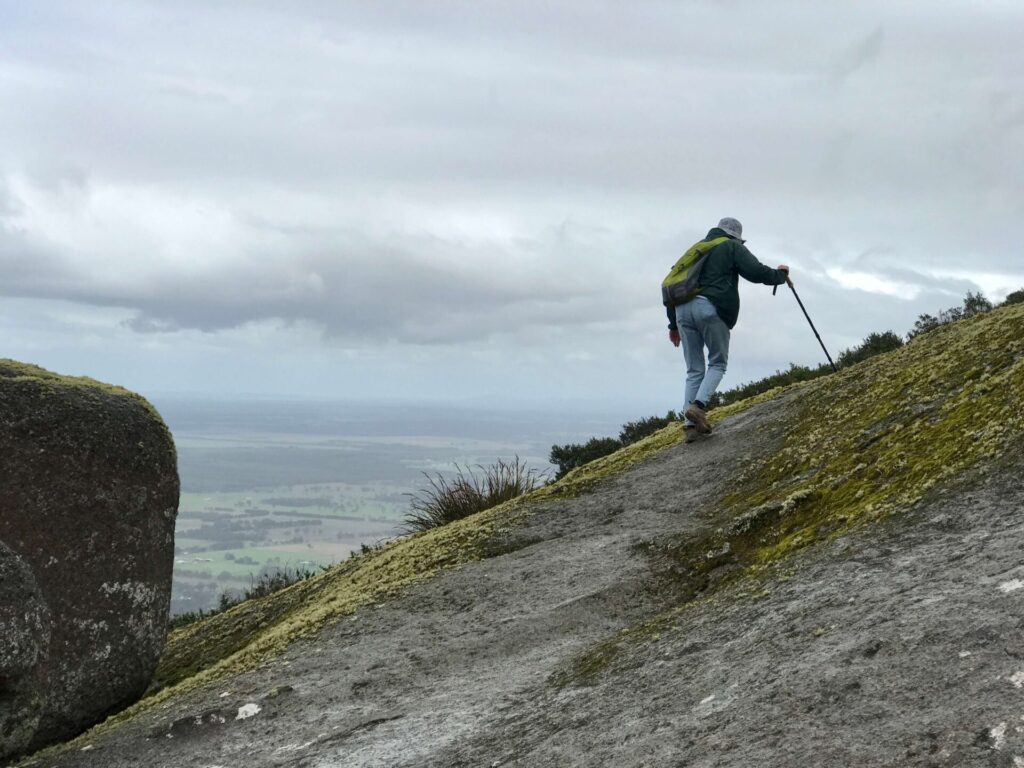
Nancy Peak is another excellent walk in the park, and one I did a couple of years ago. The circuit is 5.5 km and takes you through forest and over granite terrain, with views towards the Stirling Range and, on a clear day, the Southern Ocean. It’s a great option if you want something different from Castle Rock but still want those big Porongurup views.

Hayward Peak
Hayward Peak is a shorter but steep option, starting from the Tree-in-the-Rock picnic area. The return walk is around 3 km and takes about two hours. It’s a Class 4 trail, so expect a proper climb rather than an easy stroll.
Wansbrough Walk
The Wansbrough Walk is another good choice if you want to spend more time in the forest. The full return hike is around 8 km and follows a gully between Nancy Peak and Devil’s Slide through tall karri forest.
Stirling Range National Park
Location: 7371 Chester Pass Road, Borden
Distance from Albany: 80–100 km north, depending on which part of the park you’re visiting.

Further north of Albany is Stirling Range National Park, home to some of Western Australia’s most dramatic mountain scenery. The park covers around 115,920 hectares and is recognised for its extraordinary biodiversity.

More than 1,500 species of flowering plants grow here, with over 80 found nowhere else. Spring and early summer are especially beautiful, when wildflowers cover the lower slopes and valleys.

The Aboriginal name for the range is Koi Kyenunu-ruff, meaning “mist rolling around the mountains”. Bluff Knoll, or Bular Mial, also holds cultural significance for the Goreng and Menang people.
Bluff Knoll

Bluff Knoll is the park’s best-known landmark and the range’s highest peak, rising over 1,000 metres above sea level. The 6.8 km return trail is a Grade 4 hike and usually takes several hours.
The climb is steep in places, but the summit views are the main reward. Even if you don’t plan to hike, the lookouts around the trailhead are worth stopping at for views across the surrounding peaks.
Stirling Range Scenic Drive

You don’t have to climb a mountain to enjoy the landscape. The Stirling Range Scenic Drive runs for around 42 km through the park, passing viewpoints and some of its most dramatic peaks.
Most of the route is on unsealed but graded roads. In suitable conditions, you can drive it in a two-wheel-drive vehicle, though it’s always worth checking current road conditions first.
Other Hikes
Bluff Knoll is only the beginning if you enjoy hiking. Other options include Mount Trio, Toolbrunup Peak, Mount Hassell and Talyuberlup.
Many of these trails are relatively short in distance but can still be demanding. Mount Trio is 3.5 km return, Toolbrunup is 4 km, Mount Hassell is 3 km, and Talyuberlup is 2.6 km, but steep slopes, scree and rock scrambling make some much tougher than the numbers suggest.
We also have a separate guide to Stirling Range accommodation if you’d rather stay nearby and give yourself more time to explore.
West Cape Howe National Park
Distance from Albany: 36 km West
West Cape Howe National Park lies west of Albany and is one of the region’s most rugged and dramatic parks. Expect isolated beaches, cliffs and wild coastal scenery, with parts of the park feeling surprisingly remote given how close it is to Albany and Denmark.
The park is also well known for hang gliding and paragliding. Shelley Beach is the easiest place to see this in action, with a launch area above the beach where gliders can take off from the cliffs.
Shelley Beach is also the only part of the park accessible by two-wheel-drive vehicle -the most straightforward stop if you don’t have a 4WD.
Venture farther into the park, and things get much more adventurous. Four-wheel driving, fishing, rock climbing and bushwalking are all popular here, with access to more isolated beaches and some of the wildest coastline in the area.
If dramatic scenery and fewer crowds appeal, West Cape Howe should definitely be on your list. Torbay Head, at the park’s western end, is also the southernmost point of mainland Western Australia.
William Bay National Park
Location: William Bay National Park
Distance from Albany: 65 km West

William Bay National Park is one of the most popular coastal parks near Denmark and makes an easy addition to an Albany and Denmark road trip. Its best-known attractions are Greens Pool and Elephant Rocks, which are surrounded by huge granite formations and clear water.
The park is worth visiting year-round, although summer is especially popular for swimming and snorkelling. Entry is free, but parking can fill quickly during school holidays and other busy periods.
Greens Pool
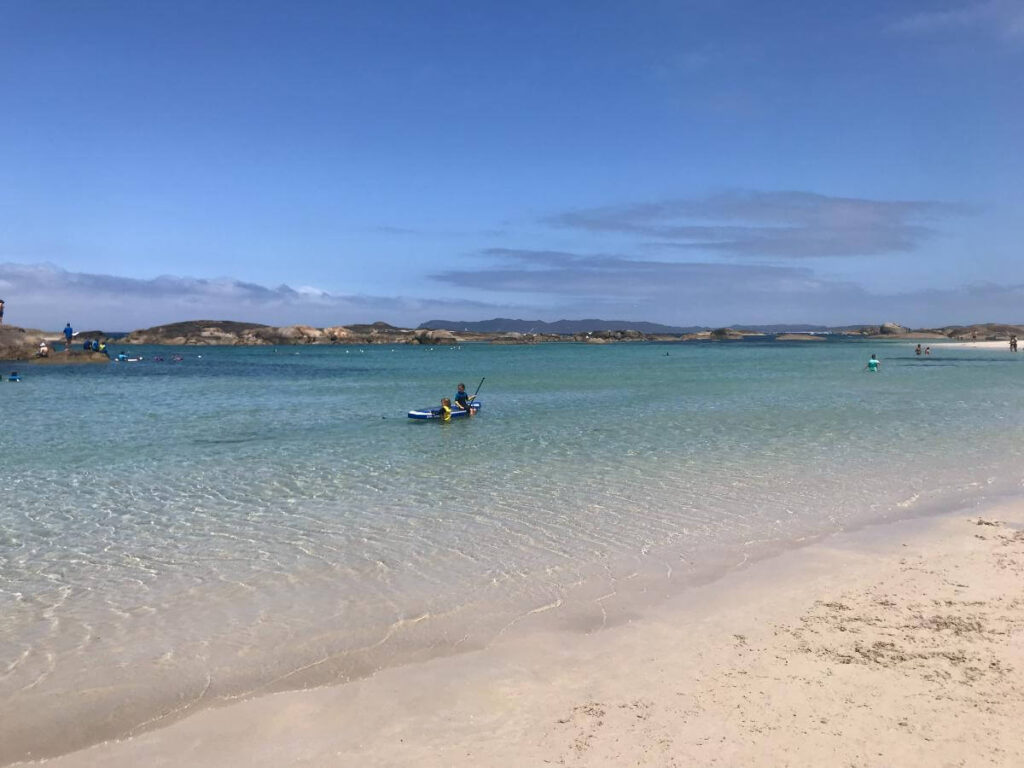
Greens Pool is famous for its clear turquoise water and large granite boulders, which help shelter the bay from the Southern Ocean. The calmer conditions make it a popular spot for swimming, snorkelling and simply relaxing by the water.

It’s particularly lovely on a calm day, when the water can look almost glassy. Just keep in mind that stronger currents can still occur, especially towards the western end.
Elephant Rocks

A short walk from Greens Pool brings you to Elephant Rocks, named after the huge rounded granite boulders that resemble a herd of elephants standing in the water.

A lookout sits above the rocks, and the trail continues down between them to a sheltered cove. It’s another beautiful place for a swim when conditions are suitable, although currents can still be strong.
Albany National Parks Map, Western Australia
Wildflowers in Albany National Parks

Wildflower season is one of the best times to explore Albany National Parks. Around Albany and the South Coast, blooms usually start appearing from late August and continue through December, with spring bringing the biggest displays.
Torndirrup, Gull Rock, Porongurup, Stirling Range, and Two Peoples Bay are all great places to look for seasonal colour and discover stunning wildflowers. Depending on where you go, you may see banksias, orchids, heathland flowers, and other species unique to this part of Western Australia.

If wildflowers are a big part of your trip, check out this guide on Wildflowers in Western Australia. It highlights current hotspots, walking trails, and the best areas around Albany for seeing blooms in season.
WA National Park Passes and Entry Fees
Some national parks charge entry fees, including Stirling Range, the Porongorups, and Torndirrup National Park. The current standard fee is $17 per vehicle, and that covers entry to other participating WA national parks on the same day.
If you plan to visit several parks during your trip, a Holiday Pass can work out better value than paying individual entry fees each time. WA Parks currently offers 5-day, 14-day, and 4-week Holiday Passes, as well as an Annual All Parks Pass.
You can buy passes online, from Parks and Wildlife Service offices and at selected outlets. In Albany, you can also buy passes from the Albany Visitor Centre.
Check the WA Parks website for current pass prices before your trip.
Which National Parks Should You Add to Your Albany Itinerary?
You most likely won’t have time to visit all national parks in Albany in one trip, so it helps to choose based on what you most want to see.
- For a first visit: Torndirrup National Park is the easiest choice, with The Gap, Natural Bridge, Blowholes, and Misery Beach all within a relatively small area.
- For hiking: Porongurup and Stirling Range National Parks have some of the best-known walks, including the Granite Skywalk and Bluff Knoll.
- For scenery: West Cape Howe and Waychinicup feel more remote and are ideal if you want quieter beaches and rugged landscapes.
- For swimming: William Bay National Park is hard to beat, especially Greens Pool and Elephant Rocks.
- For wildlife and conservation: Two Peoples Bay Nature Reserve is worth the drive, particularly if you’re interested in the rare species protected there.
If you only have a couple of days in Albany, I’d start with Torndirrup and then choose one other park based on your interests. If you’re planning the rest of your stay, our guide to things to do in Albany covers more attractions, beaches and experiences around the city.
Local Tips for Visiting Albany National Parks
- Conditions can vary a lot between the Albany national parks, especially along the coast and in the mountains. Check current park alerts and weather forecasts before leaving town, particularly if you’re planning a longer hike or travelling after heavy rain.
- Staying somewhere central can make early starts easier, especially if you plan to visit several parks, so compare Albany accommodations before your trip.
- Take plenty of water, snacks and sun protection, even on cooler days. Mobile reception can also be patchy in more remote areas, so download maps or directions before you set off.
- Around the coast, always take warning signs seriously. Large waves can arrive without much notice, and exposed rocks can be slippery even when the sea looks calm.
- For most national parks, you’ll need sturdy footwear.
- If you’re visiting during spring, leave extra time for wildflower stops. And if several national parks are on your itinerary, check whether a WA Parks Pass offers better value than paying individual entry fees.
- Don’t try to cram too many parks into one day. Distances around the Great Southern can look short on a map, but once you add walks, viewpoints and beach stops, the day disappears quickly.
FAQs About National Parks in Albany
Torndirrup National Park is Albany’s best and most popular national park. It has some of the region’s best-known attractions, including The Gap, Natural Bridge, Blowholes and Misery Beach.
Karijini National Park is Western Australia’s second largest national park. It covers more than 627,000 hectares in the Pilbara.
Torndirrup National Park is the closest major national park to Albany, around 10 km south.
You can explore Torndirrup, Porongurup, and Stirling Range by 2WD on their main access roads. At West Cape Howe, Shelley Beach is the only area accessible by 2WD, while the rest of the park is better suited to 4WD access.
Spring is one of the best times to visit, especially for wildflowers and mild hiking weather. Summer is popular for beaches and swimming, while cooler months can be good for walking if you’re prepared for rain and changing conditions.


Leave a reply